Performance System
The CRM system behind Stellantis e-mail in Brazil: one neutral base that Jeep, Fiat, Peugeot, Citroën and RAM dress in their own brand.
I built the Stellantis base and the brand systems on top of it, and used them every day to produce campaigns.
One structure
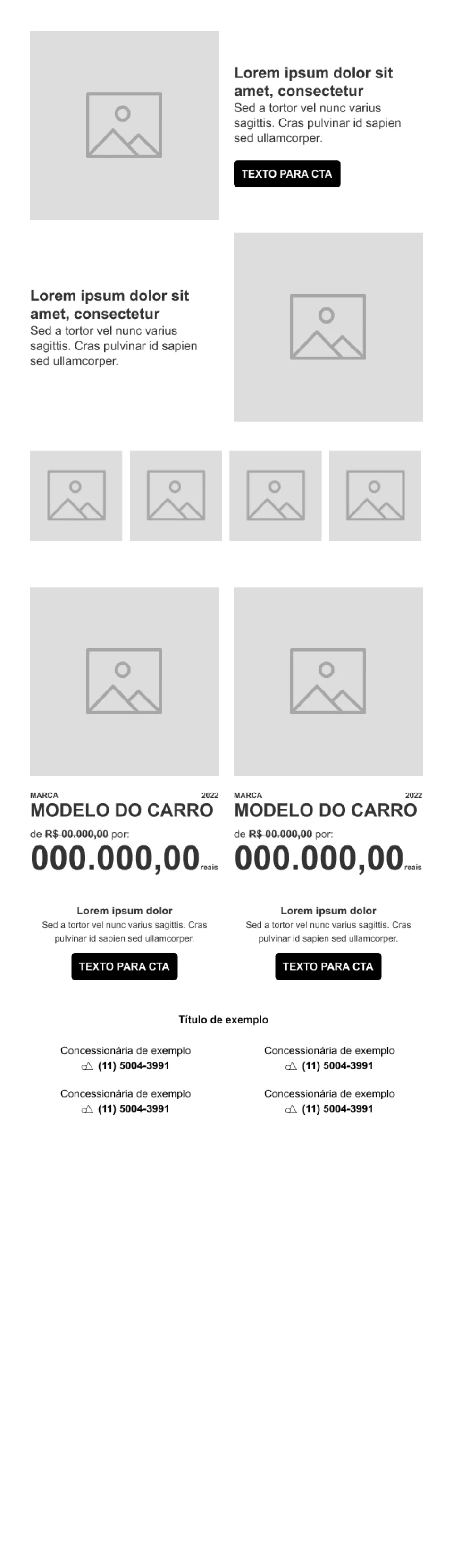
- Wireframe base
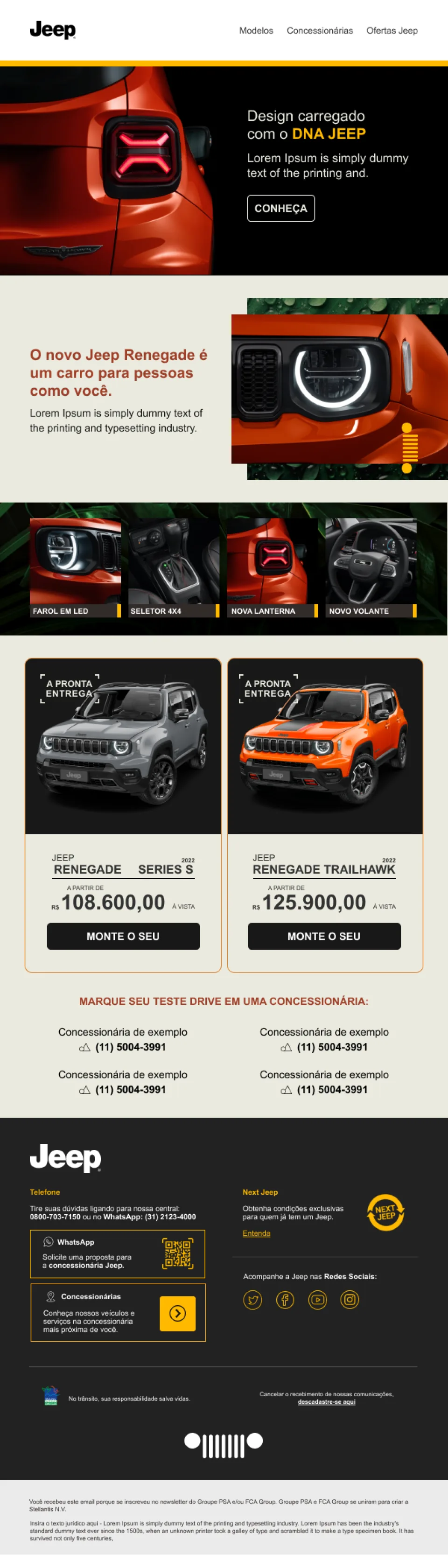
- Jeep
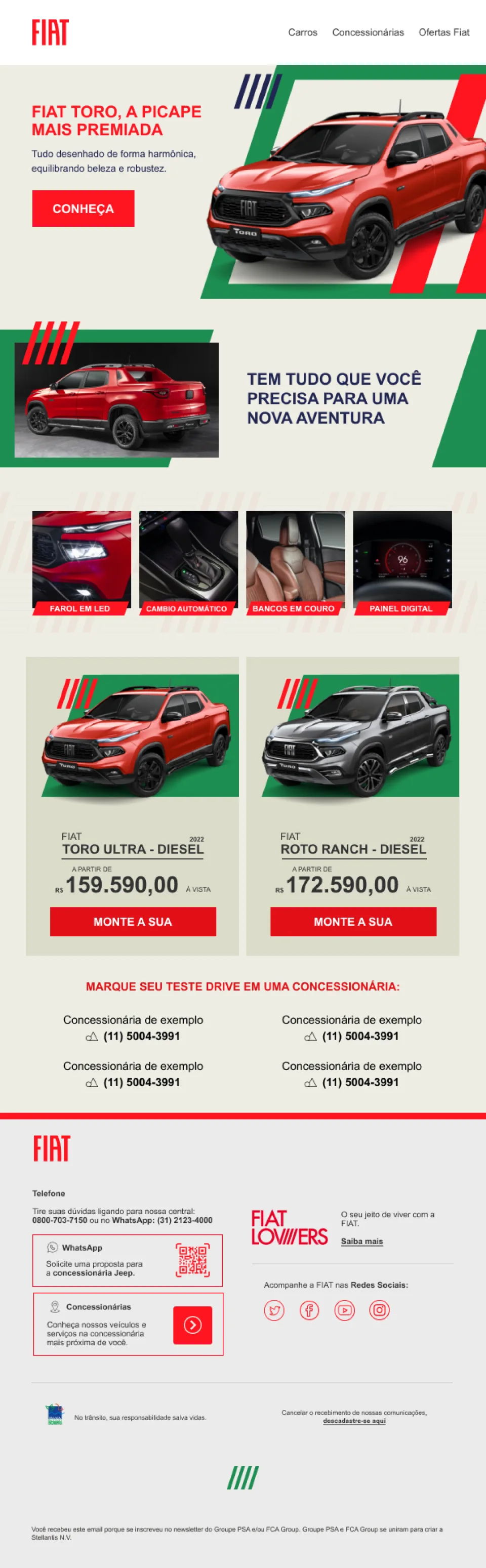
- Fiat
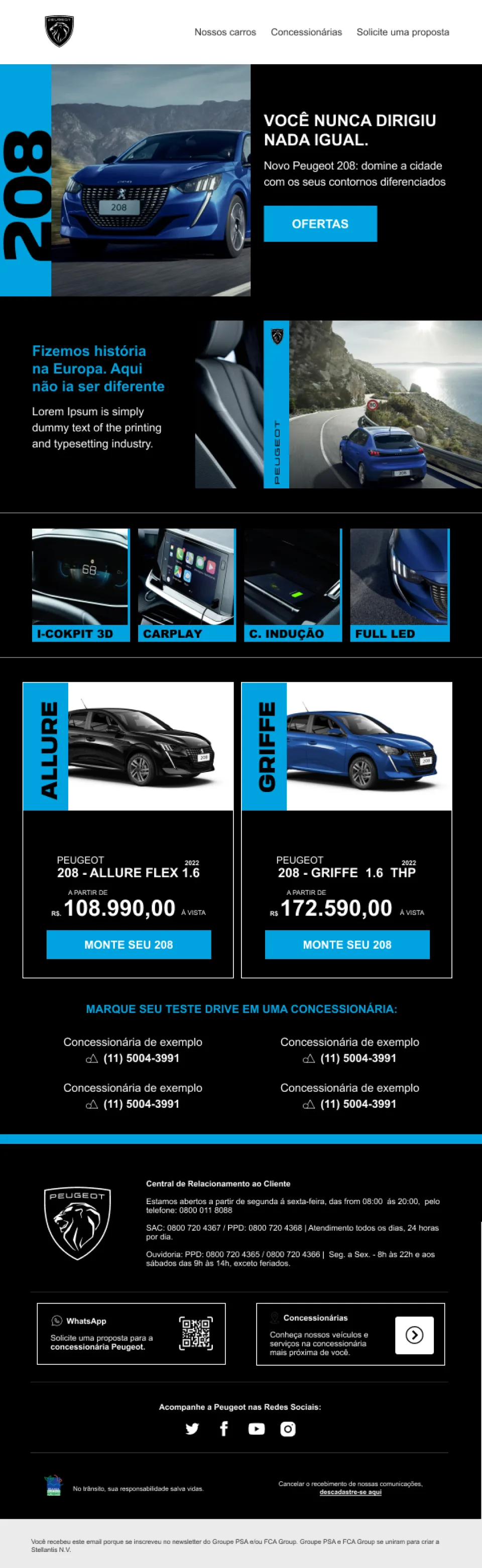
- Peugeot
- Citroën
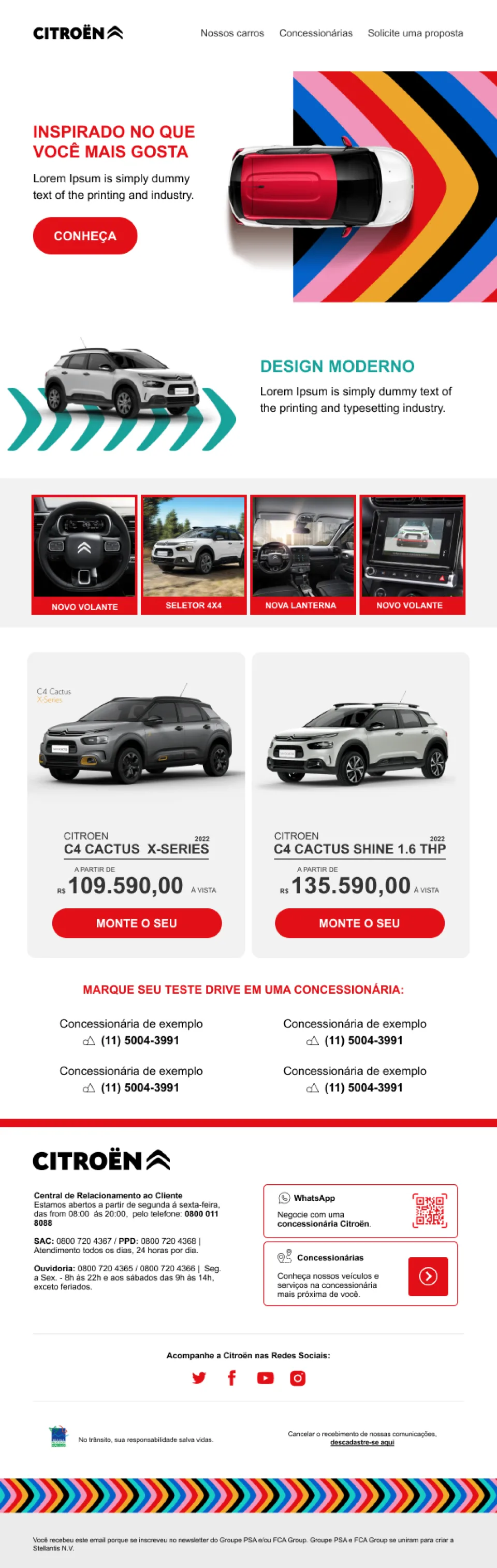
What the brand changes
- Color
- Type
- Logo
- Photography
What stays
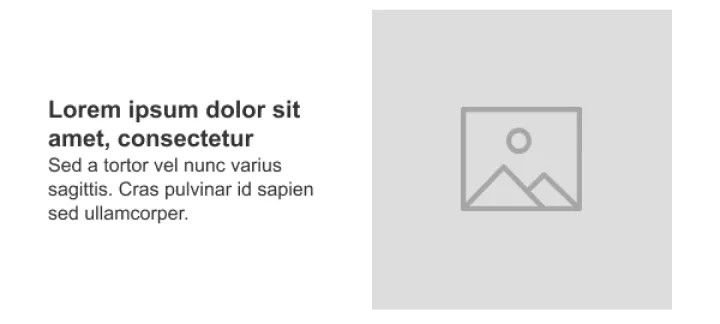
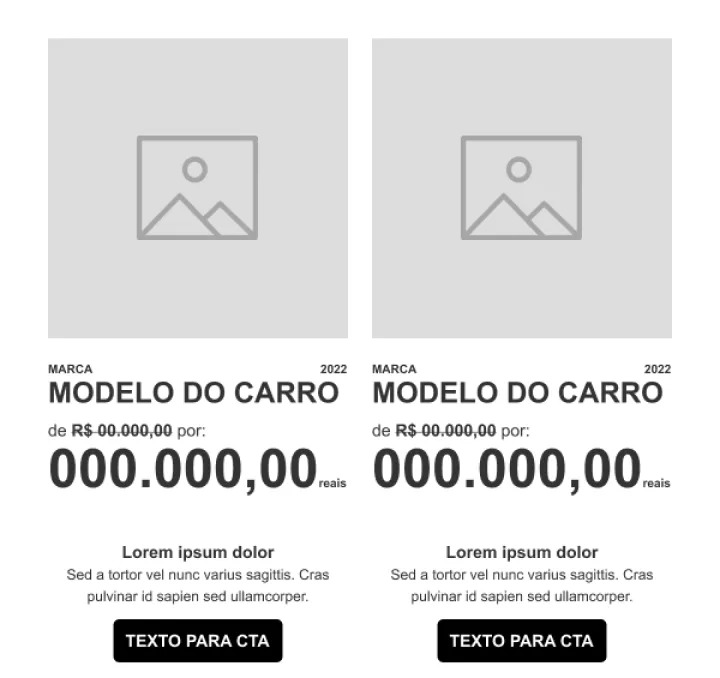
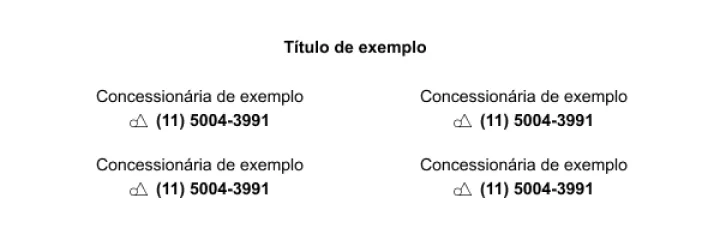
- Grid and modules
- Header and footer rules
- Type scale
- Role
- Design systems for CRM
- Client
- Stellantis, Brazil
- Brands
- Jeep, Fiat, Peugeot, Citroën and RAM
- Period
- 2021 to 2022
Every campaign started from a blank file
Each piece was built its own way. E-mails from the same brand didn't look related, and every new campaign began with a long round of structuring before any design work could start.
- 800+
- components, organized and categorized in Figma
- 6
- Figma files: the Stellantis base and five brand layers
- 4
- communication categories: product, information, highlight and showcase
- 8
- levels in the e-mail type scale, from T1 to C4
Four steps before the first module
The goals: faster campaigns, production that scales, each brand always consistent, and room left for creative work.
1Brand and product
- How each brand behaves across moments and channels
- Vehicles, categories and what sets each one apart
- Brand guides: voice, identity, photography and graphics
2The project
- Channels each brand already used
- What the brand and the project needed
- Where the client stood in the journey
3References
- Each brand's own site, social and channels
- Competitors of every brand in the group
4Creation
- All brand assets structured in Figma
- Communication categories by need
- Modules and templates for each category
One base, five brands
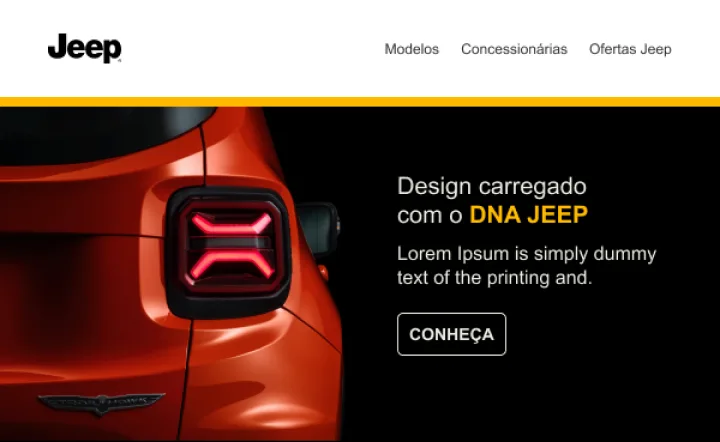
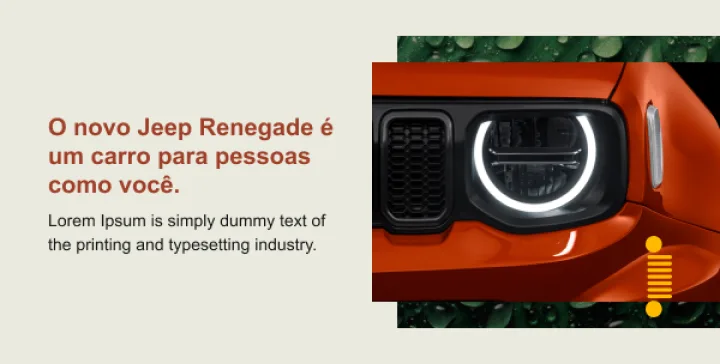
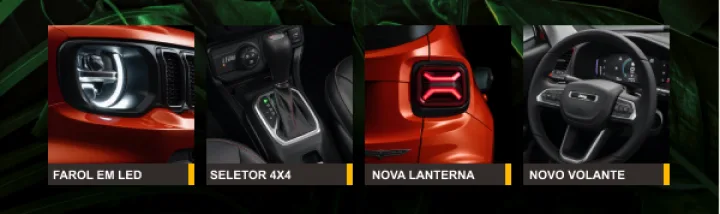
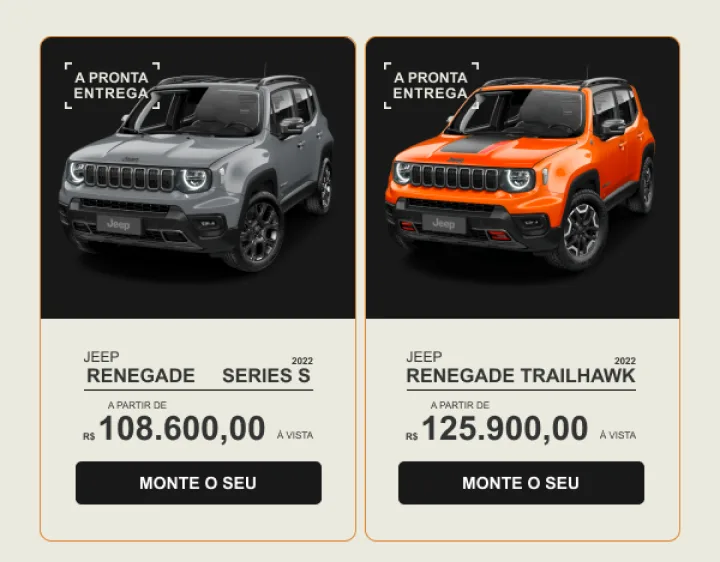
The Stellantis file held the grid, modules and templates in neutral wireframe. Each brand file put its color, type, logos and photography on top of the same structure. Jeep, Fiat, Peugeot and Citroën carried most of the volume; RAM used the same system for a smaller number of pieces.


Built before Figma had variables
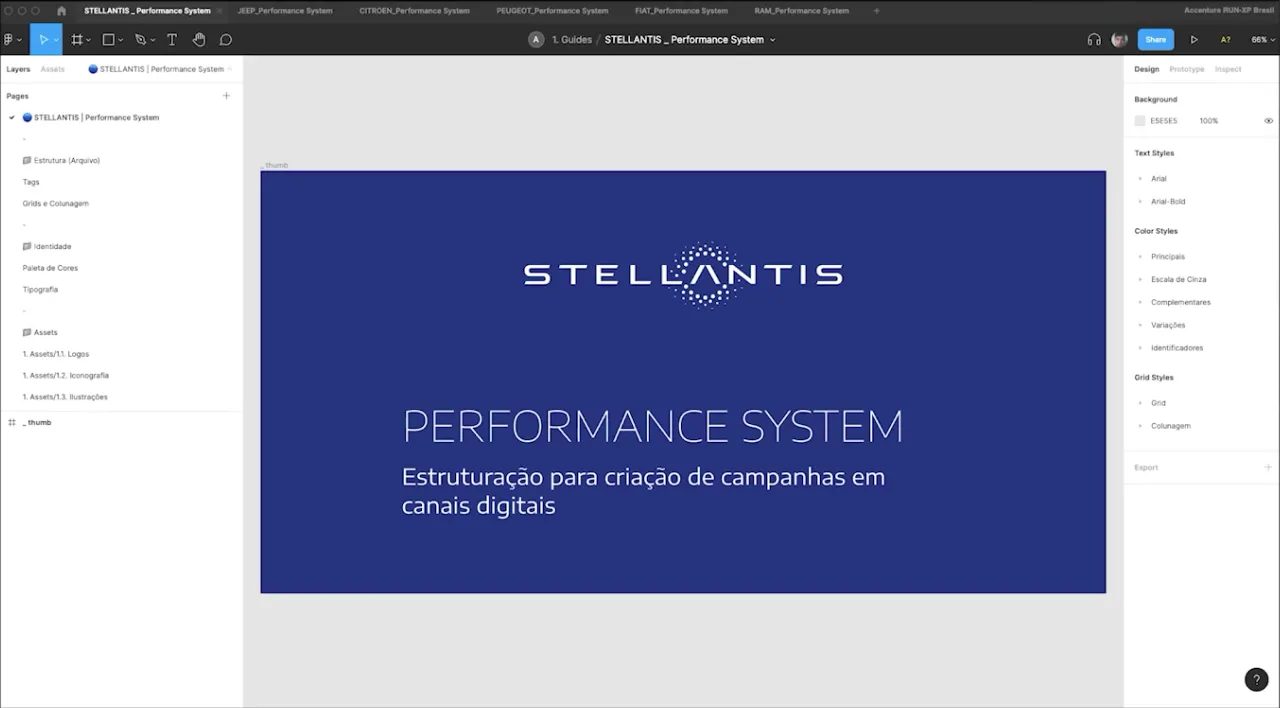
There were no tokens yet. The brand layer lived in styles and components: main, gray, complementary and identifier colors, text styles and grids, repeated in every brand file.
The same idea later became the token-based CRM System I run at Mercado Bitcoin.
The rules inside every e-mail
Brand changes, structure stays. These parts are fixed in every brand file, so any designer can build a piece without starting over.
Logo in a protected area, responsive, with room for campaign links and partner logos such as banks and programs.
Product signature and slogan, contacts and social links by audience, and a space for legal text.
Eight levels, from T1 24/28 for the main banner to C4 10/16 for footer notes.
Product, information, highlight and showcase, each with its own modules and templates.
What the operation gained
From the review with Stellantis in March 2022. Each goal of the project, what the system did about it, and the gain reported to the client.
| Goal | What the system did | Reported gain |
|---|---|---|
| Faster production | Modules and templates for each communication category | Less execution time per request |
| Production that scales | One base reused by every brand file | Shorter time to market |
| Each brand consistent | Brand assets organized as 800+ components | Fewer errors and rounds of adjustment |
Next project