
Production Hub
How a seven-person creative hub at Accenture Song produced Stellantis e-mail and WhatsApp at scale, across brands, with one shared way of working.
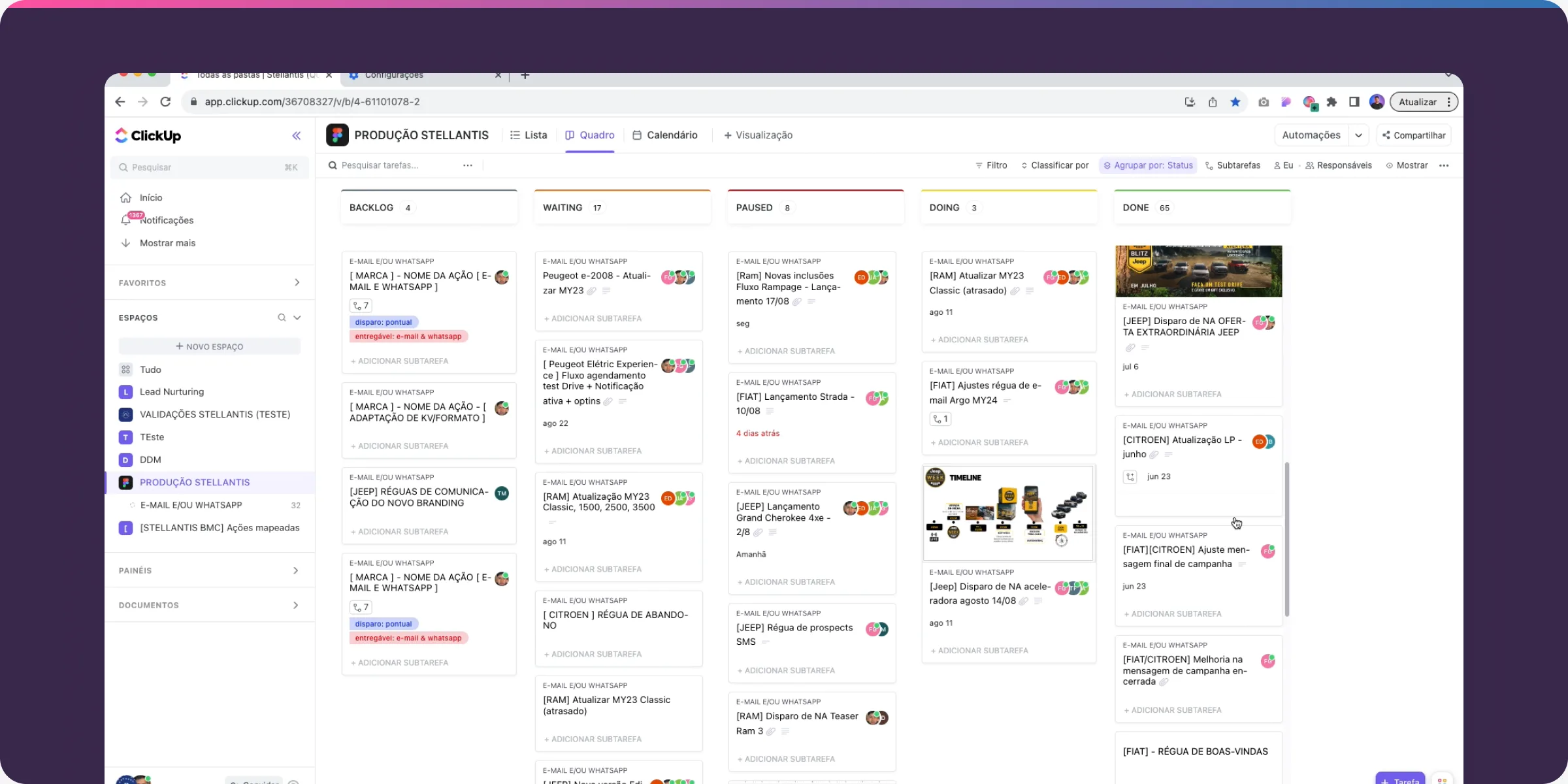
I ran the hub end to end. I took each brief from strategy, decided what shipped first, made the art, checked every HTML before it went out and read the results to shape the next round.
- Role
- Hub lead, from brief to results
- Company
- Accenture Song
- Client
- Stellantis, Brazil
- Period
- 2022 to 2023
More channels, more brands, the same team
Stellantis talked to clients through e-mail lead nurturing and, more and more, WhatsApp business messaging. As the hub grew, the work needed a model everyone could follow: who does what, how a request flows and how long it takes.
- 600+
- e-mails produced in 2022
- 610+
- e-mails produced by June 2023
- 55+
- WhatsApp active notifications by June 2023, up from 30+ in 2022
- 7
- people: strategy, governance, content, design and development
Seven people, five roles
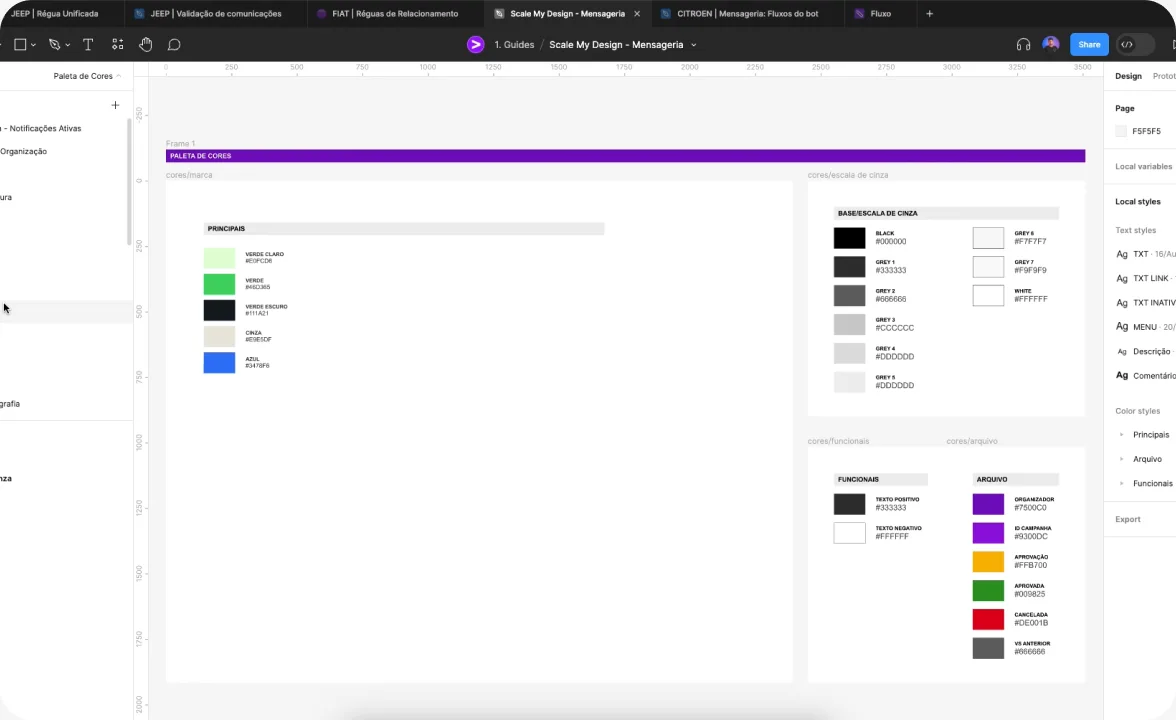
Each role owned a clear part of every request. Mine was design, plus keeping the whole hub running as its focal point.
| Role | People | What they owned |
|---|---|---|
| Strategy | 1 | Content and implementation briefs, link parameters and e-mail performance studies |
| Governance | 1 | Request tracking, communication journeys and campaign tests |
| Content | 2 | E-mail and bot copy, flow improvements, the product data sheet behind the bots and model-year updates |
| Design | 2, including me | Design systems for every brand and for WhatsApp, e-mail art, templates, research pages and KV adaptation |
| Development | 1 | HTML and CSS for every piece, and adaptations |
One request, end to end
This is how a single e-mail moved through the hub, and where I sat in it. The steps in red were mine.
| Step | Who | What happened |
|---|---|---|
| Brief | Me | Received the brief from the strategy team. |
| Priority | Me | Decided what shipped first, second and next. |
| Copy | Copywriters | Wrote the messages from the brief I handed over. |
| Design | Me, with a second designer | Made the art and briefed the other designer on extra pieces. |
| Build | Developer | Turned the approved pieces into HTML. |
| HTML check | Me | Validated every HTML myself before it went out. |
| Send | CRM operations | Uploaded the HTML to Salesforce Marketing Cloud and scheduled the send. |
| Results | Me | Came back to CTR, CTO and other CRM KPIs and turned them into insights for strategy, copy and design. |
Two flows, one hub
E-mail and WhatsApp followed different paths, with the same two gates: Stellantis validation, then an Accenture review before anything went out.
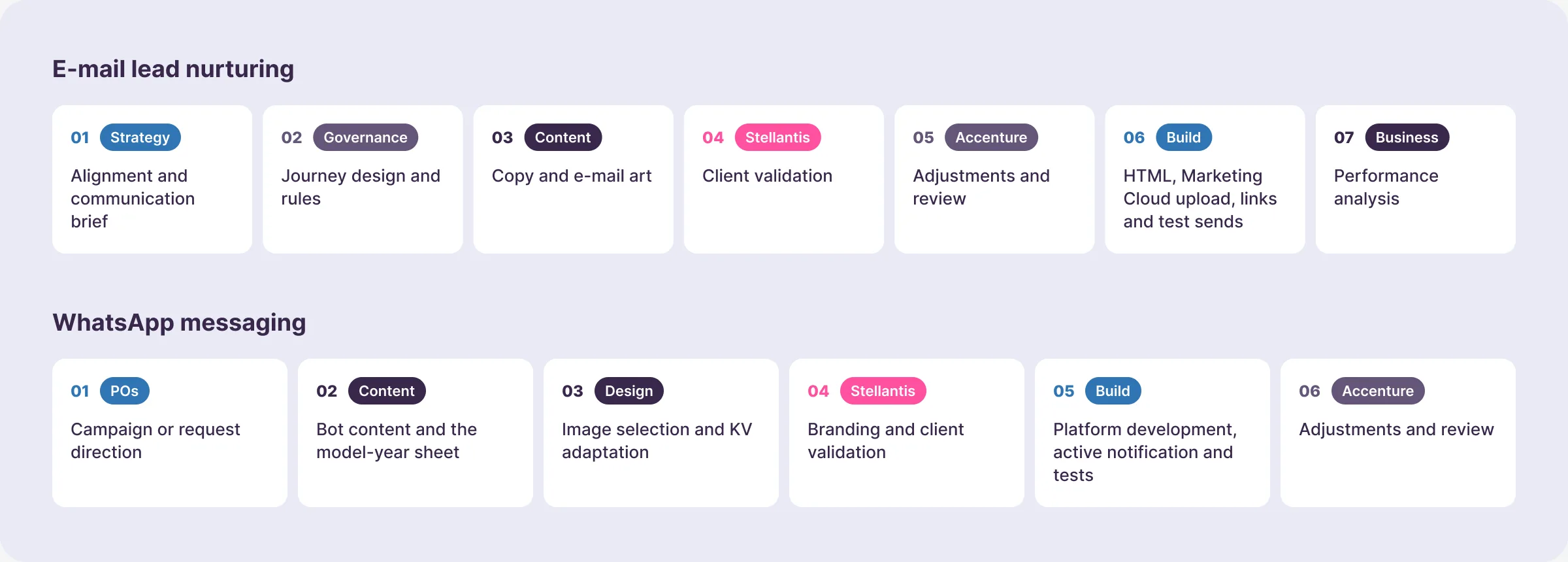
- Strategy, Alignment and communication brief
- Governance, Journey design and rules
- Content, Copy and e-mail art
- Stellantis, Client validation
- Accenture, Adjustments and review
- Build, HTML, Marketing Cloud upload, links and test sends
- Business, Performance analysis
- POs, Campaign or request direction
- Content, Bot content and the model-year sheet
- Design, Image selection and KV adaptation
- Stellantis, Branding and client validation
- Build, Platform development, active notification and tests
- Accenture, Adjustments and review
A brief and a size for every request
Requests arrived through templates, so nobody started without the material. Each one was then sized, from PP to GG, to set a realistic deadline.
Landing page or spec sheet, final campaign conditions, tagline or branding notes, and the key visual.
Updated landing page, spec sheet of the new versions, branding notes, photos or KV and any new media.
Environment, WhatsApp number for testing, navigation script and the CTA to check.
A sheet estimating hours for each stage of each request type, so deadlines came from data.

Validation went from four hours to one
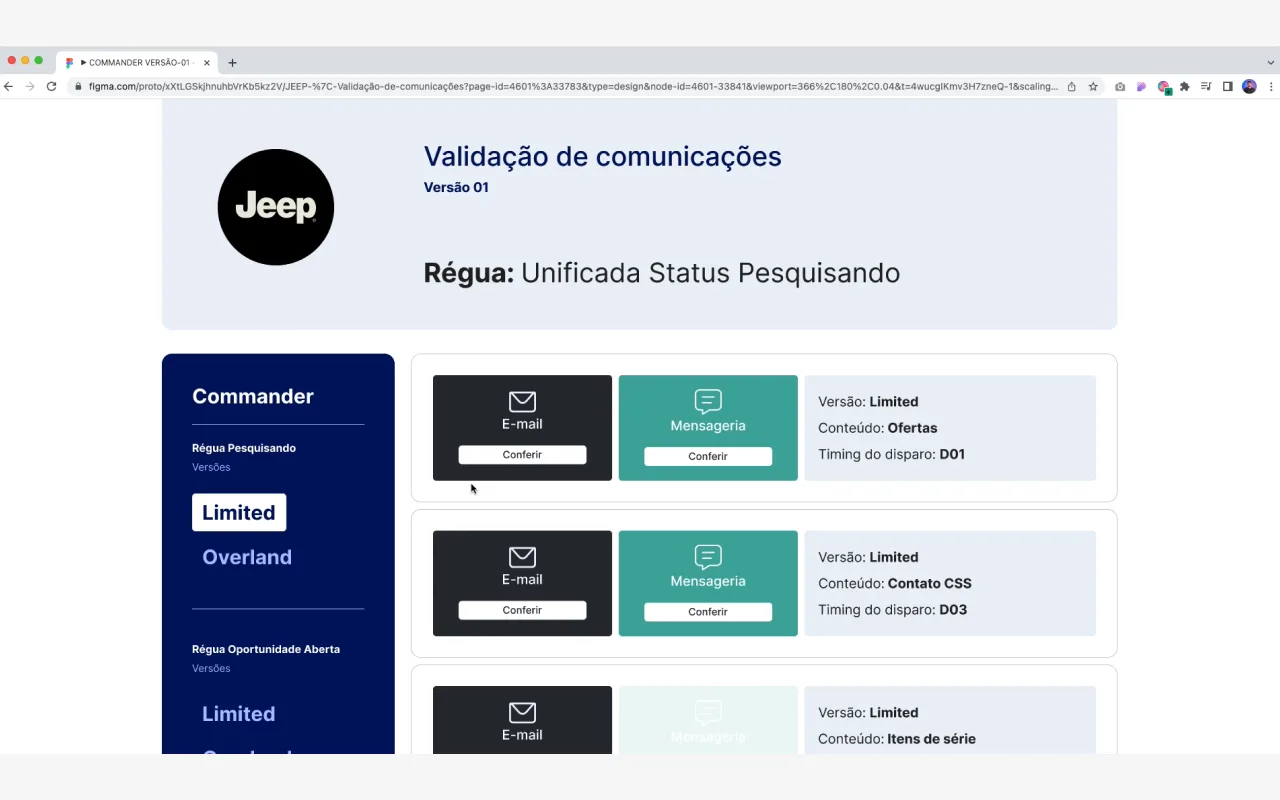
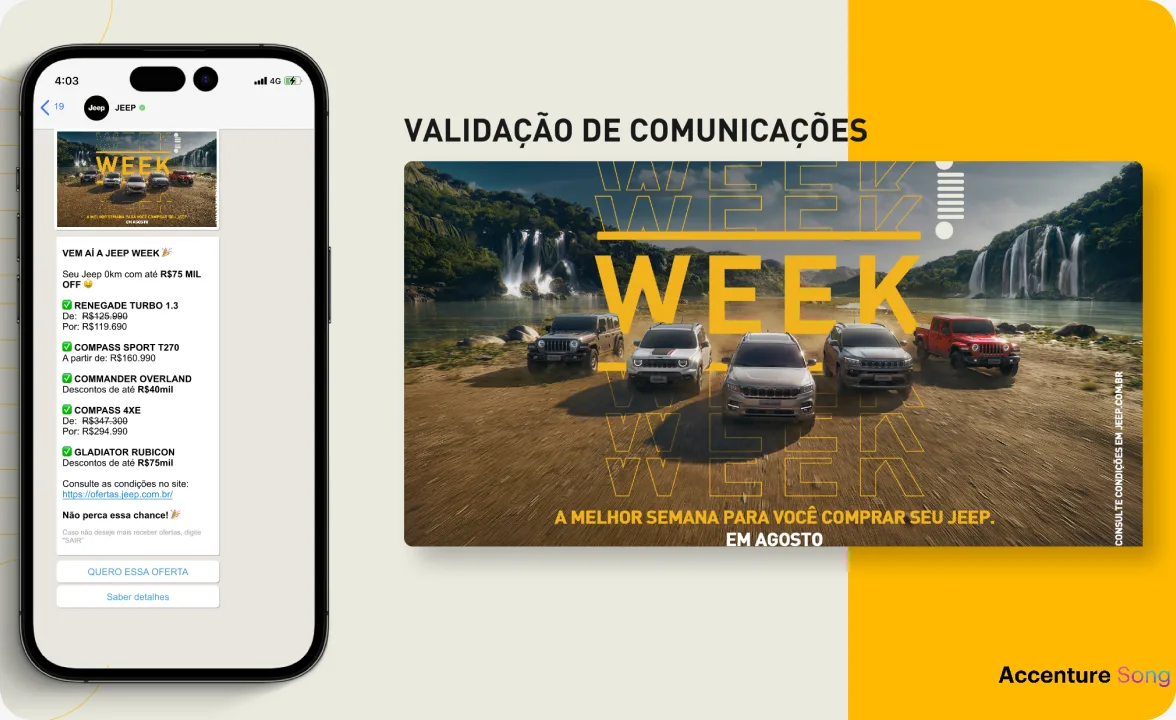
A Jeep Compass journey had 6 versions with 7 e-mails each. The old way meant editing subjects and snippets, exporting PNGs and pasting them into slides, seven times per version. I replaced it with one interactive validation page.
35 minutes per version became 10. The link expired to create urgency, adjustments happened in real time and errors dropped.
What the data suggested next
Beyond producing, the hub read its own results. Open rates from two Fiat journeys led to four proposals for the next cycle.
| What we saw | Where | What we proposed |
|---|---|---|
| Open rates fell along the journey | Fiat Fastback: 23.15% and 25.59% on average | Shorten the first-contact journey |
| Subjects written as questions seemed to open less | Fiat Fastback, even early in the journey | Avoid questions; write more direct subjects |
| E-mails with a price in the subject opened more | Fiat Pulse offers: 29.9% to 37.4% on the first e-mail | Use price as the hook |
Next project